Product appearance
Bubbles, streaking, drips and residue around the neck can reduce the quality of the finished pack.

Bottle filling applications
Cosmetic filling must control foam, strings, drips and product presentation while accommodating decorative bottles, pumps, triggers and frequent recipe changes.
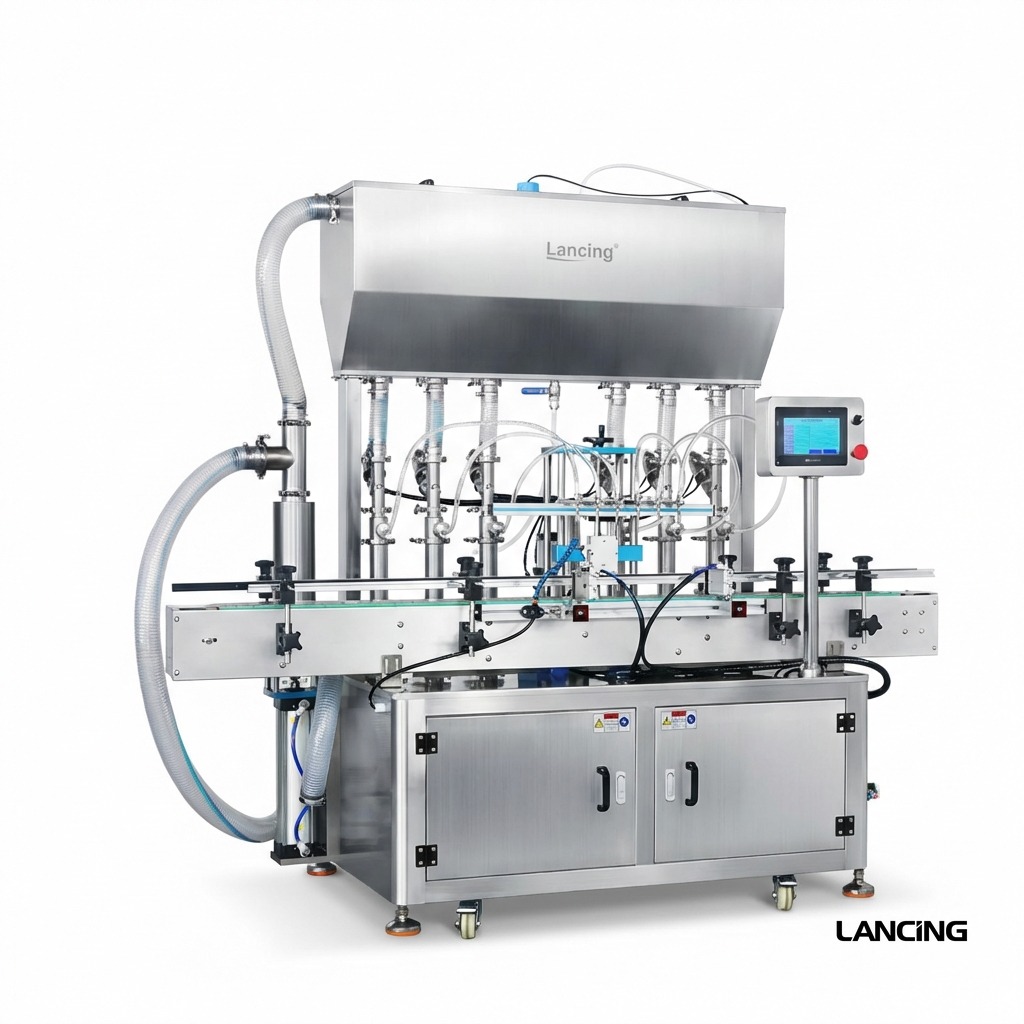
Application engineering
A laboratory viscosity or marketing description is not enough. The filler should be reviewed using product at the normal process temperature, representative bottles and the planned supply method.
Application risks
These factors often decide the filling principle, nozzle design, cleaning route and automation level.
Bubbles, streaking, drips and residue around the neck can reduce the quality of the finished pack.
A portfolio may include water-like toner, foaming shampoo, gel, lotion and thick cream, each needing a different dose profile.
Unusual shapes, light packs and small necks can need nests, pucks, guides or careful nozzle positioning.
Long dip tubes, orientation and pre-start torque often make closure handling more complex than screw caps.
Recommended starting routes
The table is a shortlist for discussion; trials and detailed engineering determine the final machine.
| Product or production need | Starting approach | Next page |
|---|---|---|
| Toners and serums | Peristaltic or pump filling for controlled smaller doses and suitable liquid formulations. | Explore route |
| Shampoo and body wash | Controlled liquid or piston filling with foam management and diving nozzles where appropriate. | Explore route |
| Lotions and creams | Positive-displacement filling with clean nozzle cut-off and suitable hopper feed. | Explore route |
| Automatic cosmetic lines | Conveyorised filling linked to pump, trigger or cap application and labelling. | Explore route |
Project information
Clear samples and measurable requirements create a faster, more reliable machinery comparison.
Send specification, SDS where applicable, viscosity range and representative samples.
Provide every bottle, closure, insert and label format—not only the easiest size.
State output by volume, batches, shifts, operators, cleaning and changeovers.
Agree test media, samples, rate, tolerances, documentation and line interfaces.
Questions
Application-specific answers for early project planning.
The answer depends on viscosity and foam. Controlled pump or volumetric systems with an appropriate fill profile and diving nozzle are common starting points.
A very broad product range may need different dosing elements, nozzles and feed systems. Product trials should determine whether one platform remains practical.
Nozzle cut-off, suck-back, correct hose routing, bottle position and a clean fill profile help. A drip tray is useful but should not replace good nozzle control.
Yes, but the pump must be oriented, presented and inserted without snagging. The bottle neck, tube length and closure geometry need to be tested together.
Send product data, representative bottles, closures, fill range and output. Lancing Ltd can identify the most credible filling route.
Bottle and pack evidence
Cosmetic and personal-care packs often combine viscous products, small openings, pumps or triggers and high presentation expectations. The filling and closure stages should be reviewed together.
Identify visible label panels, decorative surfaces and neck areas that must stay free from drips or scuffs.
Supply pumps, triggers, droppers, plugs, caps and dip tubes in the order they will be assembled.
Record viscosity, aeration, fragrance or solvent considerations, temperature and cleaning expectations.
Include every bottle and closure that is expected to run, not only the easiest format. Note the normal product condition, fill range, batch pattern and the clean presentation required at the next process.
Send application detailsFor a deeper specialist treatment of the dosing technology, continue to Paste Fillers UK. This site retains the bottle-format and container-handling decision.
Application extensions
Perfume and shampoo can both sit within cosmetics, but their dosing, bottle, cleaning, closure and site-safety questions are materially different.
Small doses, narrow necks, high product value, fragrance carryover and possible dangerous-substance controls.
Read the fragrance guideViscosity, foam, diving nozzles, neck cleanliness and pump or trigger closure integration.
Read the shampoo guidePack selection
Rigid glass, lightweight PET and squeezable HDPE packs create different handling and neck-access requirements, particularly when pumps, triggers or small openings follow the filling stage.
Provide the product, bottle, closure assembly and target fill range together. Small openings, product behaviour and the presentation of droppers or inserts can change the required machine arrangement. Assess fill consistency and clean presentation, then confirm the separate closure-handling and capping scope for the chosen pack.
Related guidance: Line planning checklist · Small bottle fillers