Complete wetted path
Every tank, hose, pump, valve, seal, sensor interface and nozzle material must be checked against the formulation and concentration.

Bottle filling machinery
Chemical filling projects need the tank, pump, tubing, valves, seals and nozzles treated as one product-contact system, with separate assessment for operator exposure and hazardous areas.

Application fit
The machine should be selected as a complete product-and-pack system, not from fill volume alone.
Specification priorities
The same nominal fill volume can require a very different solution when product behaviour, pack geometry or cleaning changes.
Every tank, hose, pump, valve, seal, sensor interface and nozzle material must be checked against the formulation and concentration.
Local extraction, enclosure, splash control, bunding and operator access may be necessary depending on the product risk assessment.
The bottle, closure, liner and label must be compatible with the filled product and any residues on the neck.
ATEX or other explosive-atmosphere requirements are a separate engineering question; corrosion-resistant construction alone does not make a machine ATEX compliant.
Filling routes
Use the filling principle as a shortlist, then verify it with the actual formulation and representative bottles. Headline technology names do not replace product trials.
| Configuration | Practical role |
|---|---|
| Corrosion-resistant pump route | Selected plastic, diaphragm or other compatible pumping components move the product through a controlled path. |
| Gravity or pressure feed | Where suitable, a compatible tank and valve arrangement can reduce unnecessary mechanical contact. |
| Diving nozzle and bottle control | Controlled nozzle movement and stable indexing help limit splash and contamination. |
| Contained or extracted station | Enclosure and extraction can be integrated where the risk assessment requires them. |
Typical products
These examples indicate where the route may be considered; the actual product and container still need to be reviewed.
A potential application for chemical bottle fillers, subject to product and pack assessment.
A potential application for chemical bottle fillers, subject to product and pack assessment.
A potential application for chemical bottle fillers, subject to product and pack assessment.
A potential application for chemical bottle fillers, subject to product and pack assessment.
A potential application for chemical bottle fillers, subject to product and pack assessment.
A potential application for chemical bottle fillers, subject to product and pack assessment.
Project route
A structured review prevents the filler, bottle control and downstream machines from being specified in isolation.
Confirm viscosity, foam, particles, temperature, compatibility and cleaning.
Review bottles, necks, closures, labels and stability using representative samples.
Agree batch size, target rate, operators, changeovers and future growth.
Freeze layout, interfaces, utilities, guarding, tests, installation and training scope.
Related planning
Use these pages to compare adjacent machine routes and prepare a more accurate enquiry.
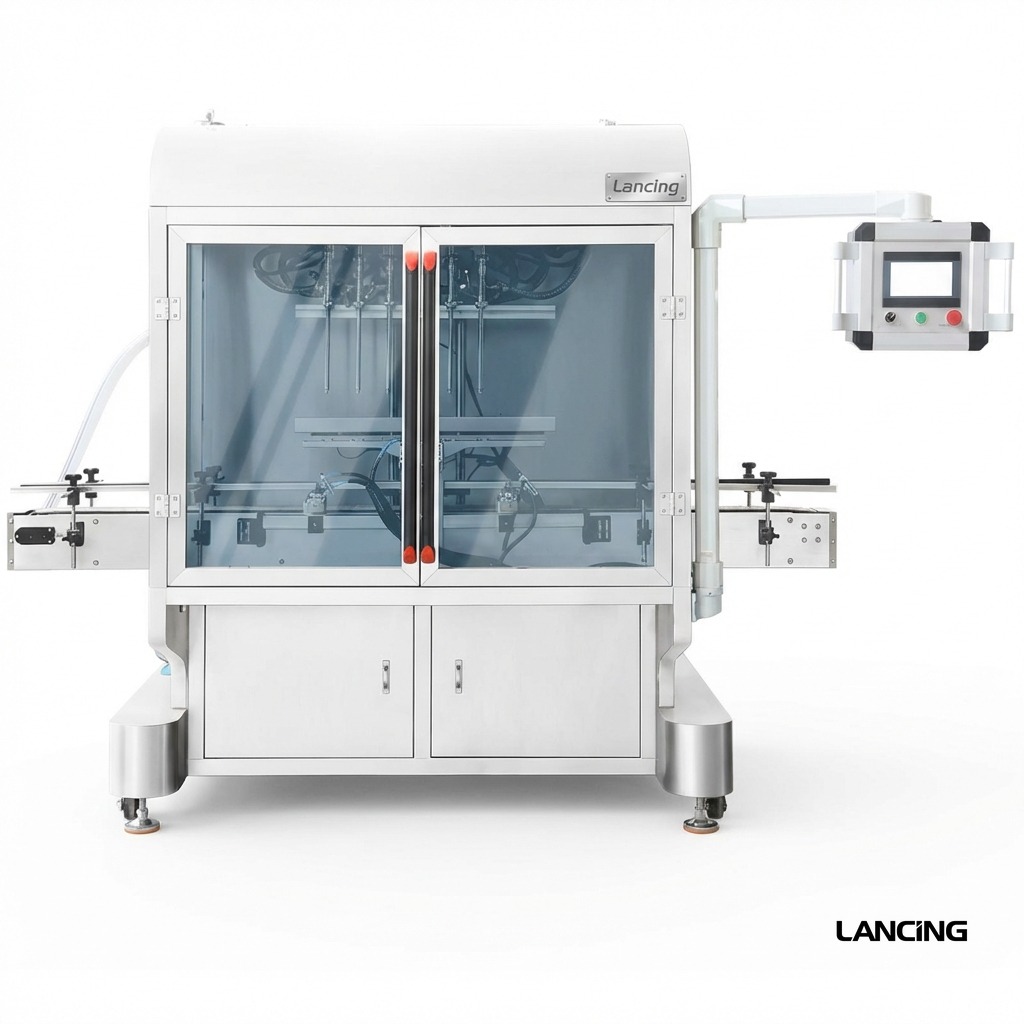
General liquid-filling routes and bottle-control factors.
Explore Liquid bottle fillersApplication planning for aggressive and foaming formulations.
Explore Chemical & cleaning products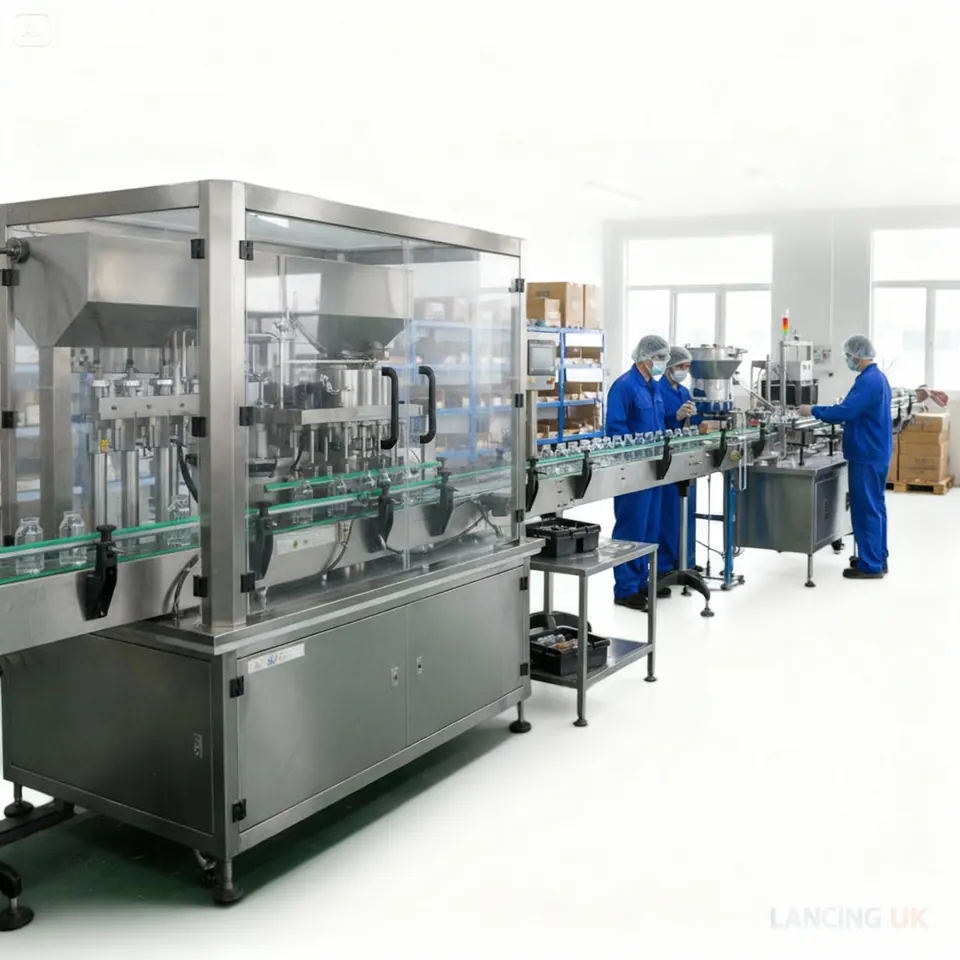
Integrate compatible closing, sealing and labelling stages.
Explore Complete filling linesQuestions
Practical answers for early project planning.
No. Material compatibility depends on the exact chemical, concentration, temperature, contaminants and exposure time. A formal compatibility review is required.
Only where the hazardous-area assessment identifies an explosive atmosphere and the equipment falls within the applicable requirements. Chemical resistance and ATEX compliance address different hazards.
Stable bottle control, diving nozzles, controlled flow profiles, correct nozzle diameter and suitable enclosure can reduce splash. Product trials and a risk assessment remain essential.
Provide current safety data sheets, product concentration, temperature, viscosity, flash point where relevant, cleaning chemicals, container details and the site hazardous-area classification.
Lancing Ltd can compare the practical bottle filling routes and confirm the right next step before quotation.
Chemical pack compatibility
For aggressive or hazardous products, material selection cannot stop at the pump and tubing. The bottle, closure, seals, labels, spill route, ventilation and cleaning method all form part of the production risk review.
Provide current safety data and known compatibility information for product-contact parts, bottle and closure.
Check empty-container stability, static, deformation and the surfaces that must remain free from residue.
Plan nozzle cut-off, drip collection, reject handling, cleaning and the response to a stopped line.
These guides isolate the pack variables that can change an otherwise suitable filling-machine route.